

Grabbing attention in today’s crowded search space is harder than ever, which is why understanding how AI search optimization tools increase organic traffic has become a game-changer for online growth. Modern search engines now depend on machine learning algorithms, natural language processing, and semantic search to decide which pages deserve visibility. This shift means content must go beyond keywords and focus on real user intent.
AI tools help marketers decode search behavior, refine topics, and improve relevance with precision. They also strengthen search intent analysis, making content more aligned with what users actually want. As a result, websites achieve stronger organic search performance and more consistent traffic growth over time.
What Are AI Search Optimization Tools?
AI search optimization tools are software platforms that use artificial intelligence to improve search visibility. Unlike traditional SEO platforms that mainly provide data, modern AI solutions actively analyze content, identify weaknesses, and suggest improvements. These systems rely on machine learning algorithms to detect patterns across millions of search results. They help businesses understand what drives rankings and where improvements can generate measurable growth.
Many organizations now use best AI SEO tools for businesses because they simplify complex SEO tasks. These tools assist with keyword discovery, content recommendations, competitor analysis, and technical improvements. They also support search experience optimization by helping websites align with modern user expectations. As search engines become smarter, AI-powered solutions help marketers remain competitive while improving overall organic search performance.
Understanding the Role of AI in Modern SEO
Artificial intelligence has transformed how search engines interpret information. Instead of matching exact keywords, modern systems use semantic search to understand relationships between concepts. This means content must answer user questions naturally and comprehensively. AI optimization tools help identify these opportunities by examining search behavior and content gaps.
Advanced platforms also support search intent analysis, which allows marketers to understand what users actually want. A search for software reviews may indicate research intent, while a search for pricing suggests buying intent. Matching content to intent improves engagement and increases the likelihood of earning valuable rankings. This process plays a major role in how AI SEO tools increase organic traffic.
How AI SEO Tools Work: Core Capabilities
Modern AI SEO tools combine automation with advanced analytics. They collect large amounts of data from search results, user behavior, and website performance. Then they transform that information into practical recommendations. These insights help marketers make faster decisions and improve efficiency across SEO campaigns.
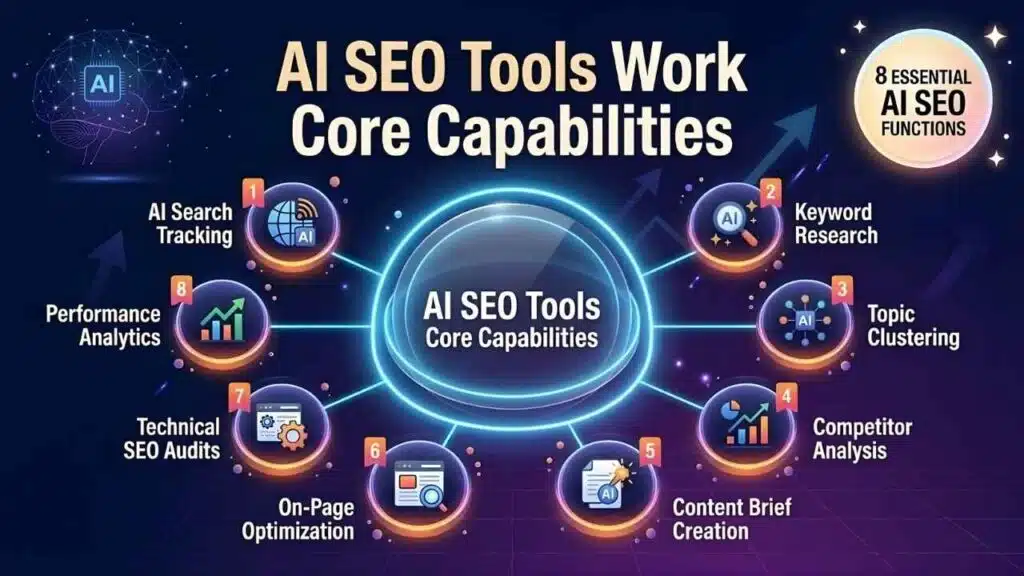
The strongest platforms combine AI-powered keyword research, technical optimization, and content analysis in one system. They monitor ranking fluctuations, uncover emerging trends, and suggest opportunities before competitors notice them. This proactive approach contributes significantly to AI search engine rankings and long-term traffic growth.
Keyword Research and Opportunity Discovery
Keyword research remains one of the most important aspects of SEO. However, AI has made this process far more intelligent. Modern systems identify related topics, emerging queries, and content gaps that traditional tools often miss. This creates stronger opportunities for how to increase organic traffic using AI.
Instead of focusing solely on search volume, AI evaluates user intent, competition levels, and topical relevance. This deeper analysis helps marketers build comprehensive content strategies around user needs. As a result, websites can improve content discoverability while strengthening their authority within a specific niche.
Content Analysis and Optimization
Content optimization has evolved beyond keyword density. AI now examines readability, topical coverage, entity relationships, and engagement signals. These systems use natural language processing to understand whether content thoroughly addresses user questions.
Many platforms provide recommendations for content structure optimization, helping writers organize information logically. Better structure improves readability and enhances search engine understanding. This directly supports stronger rankings while increasing the chances of appearing in AI-generated answers and featured search experiences.
Technical SEO Automation
Technical SEO often feels overwhelming because websites contain hundreds of moving parts. AI tools simplify this process by identifying crawl issues, broken links, duplicate content, and indexing problems automatically. They also assist with page speed optimization, which remains a critical ranking factor.
Many businesses now rely on AI-powered technical SEO optimization to maintain healthy websites. Automated audits save time and help teams prioritize the most impactful fixes. Faster websites provide better user experiences and often achieve stronger AI search performance over time.
Predictive SEO Insights
One of AI’s most valuable advantages is prediction. Traditional SEO often relies on historical data. AI systems go further by forecasting future opportunities and identifying trends before they become mainstream.
These predictive capabilities support search trend analysis, helping businesses create content ahead of competitors. Organizations that act early often gain stronger visibility and more sustainable traffic growth. This proactive approach illustrates another way how AI SEO tools increase organic traffic.
| AI Capability | Primary Function | Traffic Benefit |
| AI-Powered Keyword Research | Identifies search opportunities | Higher rankings |
| Content Optimization | Improves relevance | Better engagement |
| Technical SEO Automation | Fixes site issues | Improved crawlability |
| Predictive Analytics | Forecasts trends | Earlier visibility gains |
Intent Matching: Aligning Content With What Users Really Want
Search engines reward content that satisfies user expectations. Ranking success no longer depends solely on keyword usage. Instead, algorithms evaluate whether content solves the user’s problem effectively. This makes search intent optimization one of the most important aspects of modern SEO.
AI tools excel at understanding intent because they process large datasets quickly. Through search intent analysis, these systems identify patterns in user behavior and search results. They reveal whether people seek information, comparisons, reviews, or purchasing options. This insight allows marketers to create more relevant content and improve conversion rates.
Understanding Search Intent Categories
User intent generally falls into several categories. Informational searches seek knowledge. Commercial searches compare products or services. Transactional searches indicate readiness to purchase. Navigational searches help users locate specific websites.
When content aligns with these intentions, search engines recognize its relevance. This alignment increases engagement metrics and supports stronger AI search ranking factors. Consequently, websites experience better visibility and higher levels of qualified organic traffic.
How AI Detects User Intent More Accurately
AI systems analyze search results, click behavior, content patterns, and language signals. Through natural language processing, they determine what users expect from a query. This creates a more accurate understanding of search behavior than manual analysis alone.
These insights improve contextual optimization because marketers can tailor content to specific audience needs. When visitors quickly find answers, search engines interpret that interaction positively. Better engagement often translates into improved rankings and greater visibility.
How AI Tools Integrate Into Your Existing SEO Strategy
Many organizations mistakenly believe AI replaces SEO professionals. In reality, successful campaigns combine automation with human expertise. AI handles repetitive analysis while marketers focus on strategy, creativity, and decision-making.
This partnership strengthens AI search optimization strategies for websites because teams can move faster without sacrificing quality. AI identifies opportunities while experienced professionals determine how to act on those recommendations.
Enhancing Existing SEO Workflows
AI integrates smoothly into content creation, technical audits, competitor research, and performance tracking. Instead of spending hours gathering data manually, teams receive actionable recommendations almost instantly.
These efficiencies improve SEO analytics, visibility tracking, and search performance monitoring. Teams gain a clearer understanding of what works and where improvements are needed. This streamlined process supports sustainable growth while reducing operational complexity.
AI as a Strategic Partner Rather Than a Replacement
Successful SEO still requires human judgment. AI can suggest topics and optimizations, but it cannot fully replace industry expertise, creativity, or strategic thinking. Human oversight ensures content remains accurate, trustworthy, and aligned with business goals.
Organizations that balance automation with expertise often achieve stronger content authority. They create valuable resources that serve both users and search engines. This balanced approach remains a cornerstone of AI search engine optimization best practices.
AI-Powered Content Optimization: Structure, Headings & Internal Links
Content optimization involves far more than inserting keywords. Modern search engines evaluate organization, clarity, topical depth, and user experience. AI tools help improve these areas through advanced analysis and intelligent recommendations.
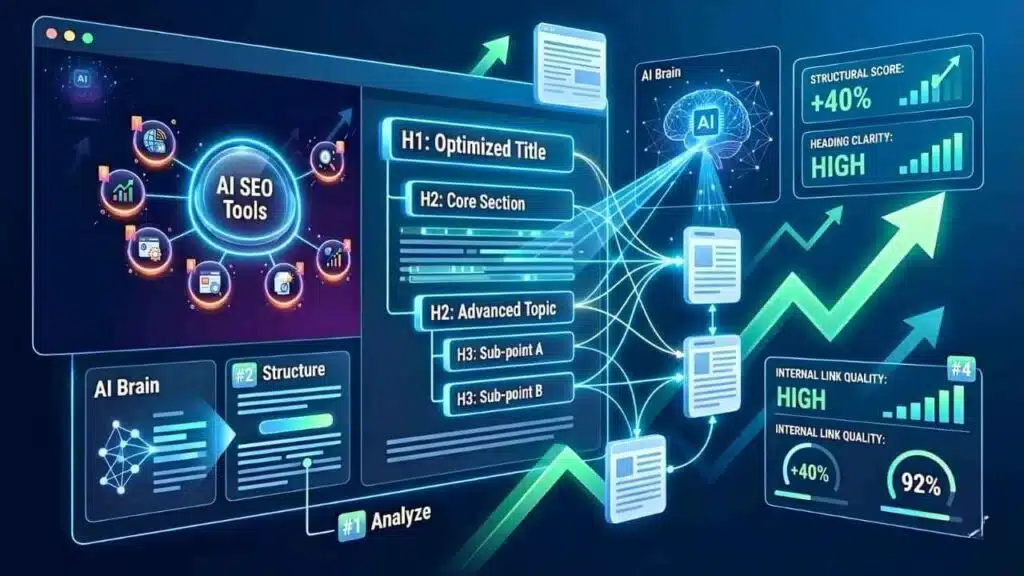
Many marketers use AI platforms to support AI content optimization strategies because structured content performs better in both traditional search and answer engines. Clear organization helps users find information quickly while helping algorithms understand relationships between topics.
Creating Search-Friendly Content Structures
Strong content begins with logical organization. AI systems recommend headings, subtopics, and content sections that align with user expectations. These recommendations improve content structure optimization and make information easier to consume.
Better structure also helps websites appear in AI-generated answers and generative AI search results. Search engines prefer content that presents information clearly because it improves overall user satisfaction.
Optimizing Headings for Search Visibility
Headings act like road signs. They guide readers through content while helping search engines understand page hierarchy. AI tools analyze top-performing content and suggest heading structures that improve relevance and readability.
This approach supports conversational search optimization because headings often mirror natural user questions. As voice search and AI-powered interfaces continue to grow, conversational structures become increasingly valuable.
Smarter Internal Linking Strategies
Internal links help search engines discover and understand content relationships. AI platforms identify opportunities to connect related pages naturally. This improves navigation while distributing authority throughout a website.
Effective internal linking strengthens content discoverability and enhances overall brand visibility. It also supports content optimization for LLMs and assists search engines in understanding topic relationships more effectively.
| Content Element | AI Optimization Benefit | SEO Impact |
| Headings | Better organization | Improved rankings |
| Internal Links | Stronger site structure | Better crawlability |
| Topic Coverage | Greater relevance | Higher authority |
| Content Flow | Better user experience | Increased engagement |
Faster Content Refreshes and Publishing Speed
Search engines favor fresh information because users want current answers. An article published three years ago may still contain valuable insights. However, outdated statistics, broken references, and old recommendations can reduce trust. This is where AI becomes extremely valuable. Modern AI systems scan websites, identify aging content, and recommend updates automatically. Businesses using how AI SEO tools increase organic traffic strategies often improve rankings simply by refreshing existing pages instead of creating entirely new ones.
Content updates also help maintain relevance within rapidly changing industries. AI platforms analyze competitors, monitor ranking changes, and detect emerging topics. These capabilities support search trend analysis and improve overall AI search performance. Faster publishing cycles allow businesses to react quickly to new opportunities. This speed creates a significant advantage in competitive markets where timing often influences visibility.
Why Content Freshness Matters
Fresh content signals relevance to search engines. Updated pages often receive renewed attention from crawlers. This can improve indexing and increase opportunities for ranking improvements. Regular updates also demonstrate expertise and commitment to providing accurate information.
Businesses that maintain current content generally achieve stronger organic search performance. They also improve user trust because visitors find reliable and updated answers. In many industries, freshness has become an important ranking consideration.
How AI Accelerates Content Updates
AI tools review existing content and compare it against current search results. They identify missing topics, outdated information, and opportunities to improve relevance. This process saves hours of manual work and supports smarter content management.
These systems also assist with SEO analytics and visibility tracking by highlighting pages with declining performance. Updating those pages often delivers faster results than creating new content from scratch.
Scaling Content Production Without Sacrificing Quality
Many companies struggle to publish consistently because content creation requires significant resources. AI helps streamline research, outlining, optimization, and editing processes. This allows teams to produce more content while maintaining quality standards.
The combination of automation and human expertise improves efficiency without compromising accuracy. Organizations using AI SEO tools for small businesses often discover that they can compete effectively against larger competitors by working smarter rather than simply spending more.
GEO: Optimizing for AI-Driven Search Results
Search is entering a new era driven by artificial intelligence. Traditional search results are increasingly accompanied by summaries generated by AI systems. This evolution has introduced generative engine optimization, often called GEO. Businesses that understand this shift position themselves for future growth.
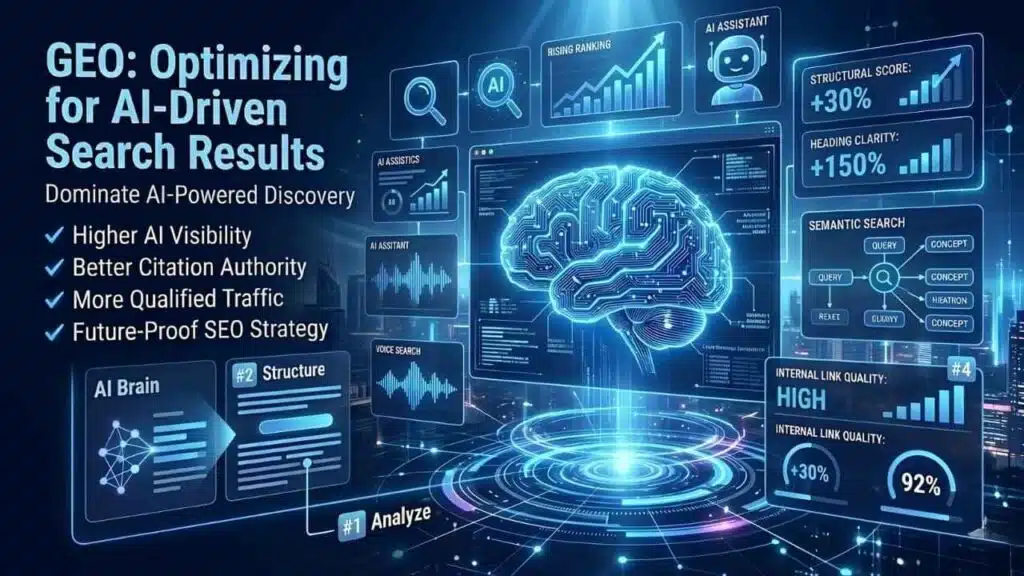
The rise of generative AI search, AI-generated answers, and intelligent assistants means websites must optimize for more than traditional rankings. Content now needs to communicate clearly with both users and AI systems. This change has transformed how marketers approach visibility.
What Is Generative Engine Optimization (GEO)?
GEO focuses on helping content appear within AI-generated responses rather than only traditional search listings. While SEO aims to rank pages, GEO aims to influence how AI systems select and present information.
As AI search ecosystems continue expanding, businesses must ensure their content is clear, authoritative, and well-structured. These characteristics increase the likelihood of inclusion in AI-generated summaries.
How AI Search Engines Generate Answers
Modern answer engines rely heavily on large language models to understand questions and generate responses. These systems examine multiple sources, identify trusted information, and create summarized answers for users.
This process differs from traditional ranking methods because visibility may come from being referenced within an answer rather than receiving a direct click. Understanding SEO for AI-generated answers is becoming increasingly important for long-term search success.
GEO Best Practices for Increased Visibility
High-quality content remains the foundation of GEO success. Clear explanations, strong expertise signals, accurate information, and logical organization improve the likelihood of selection by AI systems.
Businesses focusing on how to optimize content for AI search engines should prioritize expertise, clarity, and comprehensive coverage. These elements support both traditional SEO and AI-driven visibility.
Preparing for Google’s AI Overviews and Future Search Experiences
Google’s AI Overviews represent a significant shift in search behavior. Users increasingly receive summarized answers before browsing websites. This trend highlights the growing importance of how to rank in Google AI overviews.
Optimizing for AI summaries requires strong content structure, trusted information, and comprehensive topic coverage. Companies investing in AI overview optimization today will likely benefit as AI-driven search continues to expand.
| GEO Factor | Purpose | Impact on Visibility |
| Structured Content | Improves AI understanding | Higher inclusion rates |
| Content Authority | Builds trust | Greater citation potential |
| Entity Optimization | Enhances context | Better AI relevance |
| Clear Answers | Supports summaries | Increased exposure |
Adapting Your SEO Strategy for AI Search Engines
Search behavior continues to evolve. Keywords remain important, yet context and user satisfaction now play a much larger role. Search engines increasingly prioritize meaning over exact phrases. This shift has accelerated the importance of AI search optimization strategies for websites.
Modern SEO requires a broader perspective. Businesses must think about user journeys, topic depth, and audience needs. Successful optimization involves understanding how AI systems interpret information and how users interact with content.
The Shift From Keywords to Context
Traditional SEO often focused on keyword repetition. Modern algorithms rely more heavily on semantic search and contextual understanding. They evaluate whether content answers questions effectively rather than simply matching phrases.
This evolution benefits websites that create comprehensive resources. Strong context improves relevance and supports better AI search ranking factors across multiple search experiences.
Building Content for Humans and AI Systems
Content should always prioritize human readers. However, AI systems must also understand the information clearly. This balance requires logical organization, clear language, and strong topic coverage.
Businesses investing in optimize content for AI search engines strategies often discover that improvements benefiting AI systems also improve user experience. Better content serves everyone.
Future-Proofing Organic Search Performance
Future search success depends on adaptability. Algorithms will continue changing as AI technology advances. Organizations that focus on quality, expertise, and user value remain best positioned for sustainable growth.
Maintaining strong organic search performance requires continuous optimization, ongoing research, and attention to emerging search trends.
Measuring Organic Traffic Growth With AI SEO Tools
SEO without measurement resembles driving without a map. Businesses need clear performance indicators to understand whether their efforts generate results. AI platforms simplify this process by automating data collection and analysis.
Advanced reporting systems provide deeper insights into traffic patterns, user behavior, and ranking changes. These capabilities help businesses identify successful strategies and refine underperforming areas.
Key Metrics to Track
Several metrics reveal whether SEO efforts are delivering value. Organic traffic, click-through rates, keyword rankings, engagement metrics, and conversions all contribute to a complete performance picture.
Monitoring AI visibility metrics, AI ranking metrics, and traditional SEO indicators provides a balanced understanding of overall performance. These insights help guide future decisions.
AI-Powered Reporting and Analytics
Modern AI platforms automate reporting processes that once required hours of manual effort. Dashboards highlight trends, identify anomalies, and provide actionable recommendations.
These capabilities strengthen search performance monitoring and improve decision-making. Businesses can react faster to opportunities while minimizing risks.
Connecting SEO Efforts to Revenue
Traffic alone does not guarantee success. Businesses must understand how search visibility contributes to leads, sales, and revenue. AI systems help connect ranking improvements to measurable business outcomes.
This connection transforms SEO from a marketing expense into a strategic growth investment. Organizations that understand this relationship often achieve stronger long-term results.
Real-World Results: What to Realistically Expect
Many companies expect instant success after adopting AI SEO tools. In reality, meaningful growth takes time. AI accelerates optimization efforts, but search engines still require time to evaluate changes and adjust rankings.
Realistic expectations help businesses remain committed to long-term strategies. Consistent improvement often produces stronger results than short-term experimentation.
Short-Term Wins
Early improvements frequently come from technical fixes, content updates, and improved keyword targeting. These changes can produce noticeable gains within several weeks.
Businesses often experience enhanced visibility and stronger engagement during this phase. Quick wins help build momentum for future growth.
Medium-Term Growth Opportunities
As content expands and authority increases, rankings often improve across larger keyword groups. This stage frequently delivers significant traffic growth.
Organizations implementing backlink strategies for AI SEO alongside content optimization often achieve even stronger results because authority signals continue to influence rankings.
Long-Term Competitive Advantages
Over time, consistent optimization creates compounding benefits. Strong authority, comprehensive content, and trusted expertise establish sustainable competitive advantages.
This long-term perspective illustrates why understanding how AI affects SEO in 2026 is critical. Search continues evolving toward intelligence-driven experiences, making adaptation essential.
Factors That Influence Results
Results vary based on competition, website authority, content quality, technical health, and execution consistency. Businesses that commit to continuous improvement generally achieve the strongest outcomes.
Patience remains important. SEO growth resembles planting a tree. Early progress may seem slow, yet sustained effort eventually produces substantial rewards.
Common Mistakes to Avoid When Using AI SEO Tools
AI can improve SEO results significantly. However, relying too much on automation can create problems. Businesses should use AI as a support tool rather than a complete replacement for human expertise. A balanced approach helps strengthen AI search optimization for websites and long-term growth.
Over-Relying on Automation
AI can generate content and recommendations quickly. However, publishing without review may lead to inaccurate or generic content. Human oversight helps maintain quality and build stronger content authority.
Ignoring Search Intent
Many websites target keywords but overlook what users actually need. Effective search intent optimization ensures content answers questions and delivers real value, leading to better engagement and rankings.
Focusing Only on Rankings
Rankings are important, but they are not the only measure of success. Businesses should also track conversions, engagement, and leads through SEO analytics to understand the true impact of SEO efforts.
Neglecting Content Quality
Search engines reward useful and trustworthy content. Thin or repetitive pages rarely perform well. Following AI search engine optimization best practices helps improve both rankings and user experience.
How to Choose the Right AI SEO Tool for Your Goals
Choosing the right AI SEO platform depends on your business goals, budget, and SEO needs. The best tools simplify workflows and provide actionable insights that support growth.
Essential Features to Look For
Look for platforms that offer AI-powered keyword research, content optimization, technical SEO audits, and performance reporting. These features help improve visibility and efficiency.
Evaluating Ease of Use
A user-friendly platform makes adoption easier and helps teams implement recommendations more effectively.
Comparing Cost Versus Value
The right tool should deliver measurable results. Many businesses using AI SEO tools for small businesses find that automation saves time and improves performance.
Matching Tools to Business Objectives
Local businesses may prioritize local search optimization, while larger brands often need advanced analytics and reporting. Features like review management and local authority support can also be valuable.
| Selection Criteria | Business Benefit |
| Content Optimization | Better rankings |
| Technical SEO Features | Improved site health |
| AI Analytics | Smarter decisions |
| Ease of Use | Higher efficiency |
Final Takeaway: Is AI Search Optimization Worth It?
AI is transforming how websites rank and attract visitors. Businesses that understand how AI SEO tools increase organic traffic can identify opportunities faster and improve search performance more effectively.
The Key Benefits of AI Search Optimization Tools
AI improves keyword research, content optimization, reporting, and technical SEO. These benefits contribute to stronger brand visibility and better traffic growth.
Why Organic Traffic Growth Requires Both AI and Human Expertise
AI provides data and automation, while human expertise ensures content remains accurate, useful, and engaging. Together they create a stronger SEO strategy and improve AI search performance.
Final Verdict
AI is not replacing SEO. It is making SEO smarter. Businesses investing in how to increase organic traffic using AI, optimizing websites for large language models, and generative engine optimization will be better prepared for the future of search.
“AI doesn’t replace expertise. It enhances it through better insights and faster decision-making.”
Conclusion
In conclusion, understanding how AI search optimization tools increase organic traffic is essential for staying competitive in today’s evolving digital landscape. Search engines now depend on machine learning algorithms, natural language processing, and semantic search to evaluate content quality and relevance more deeply than ever before. This shift has made traditional SEO less effective on its own. AI tools bridge this gap by improving search intent analysis, enhancing content structure, and boosting overall organic search performance.
As a result, websites gain stronger visibility, better engagement, and more qualified traffic. Businesses that adopt AI-driven strategies early will continue to grow steadily while adapting smoothly to future search engine changes.
Frequently Asked Questions (FAQ)
What is how AI search optimization tools increase organic traffic?
It refers to using AI-powered tools to improve rankings, relevance, and visibility in search engines. These tools help attract more organic visitors by optimizing content for user intent.
How do AI SEO tools improve rankings?
They use machine learning algorithms and semantic search to analyze content, fix gaps, and align pages with search intent for better ranking performance.
Do AI tools really increase organic traffic?
Yes, they improve search intent analysis and content quality, which leads to higher visibility and more organic clicks over time.
Are AI SEO tools better than traditional SEO tools?
AI tools are more advanced because they automate insights, predict trends, and optimize content faster than traditional SEO methods.
Can small businesses benefit from AI SEO tools?
Absolutely, they help small businesses improve content discoverability and compete with larger brands using smarter optimization strategies.

Abdul Manan is a professional SEO content creator and AI-SEO strategist at seofyai.com. He specializes in helping businesses rank higher on Google through AI-powered, data-driven content optimization. Connect on LinkedIn or visit seofyai.com for expert SEO tips.