
Businesses across the USA now ask one important question: how can an ai search monitoring platform improve seo strategy in a search landscape controlled by artificial intelligence. Modern search engines no longer rank pages using keywords alone. They analyze user behavior, semantic relevance, and engagement patterns together. Because of this shift, companies increasingly rely on AI SEO tools, search visibility monitoring, AI-powered SEO, AI search optimization, and SEO automation to stay competitive.
These advanced systems help brands monitor ranking fluctuations, discover content gaps, and predict search trends before competitors react. As AI-driven search continues evolving, businesses using intelligent SEO monitoring platforms gain stronger visibility, faster optimization insights, and long-term digital growth.
What is AI SEO Monitoring and Why It Matters in 2026
AI SEO monitoring refers to the use of machine learning technology to track, analyze, and improve website visibility across modern search ecosystems. Unlike older SEO software that only checked keyword positions, modern systems evaluate user behavior, semantic meaning, authority signals, and content quality simultaneously.
These tools continuously monitor search trends and provide actionable recommendations in real time. Businesses using organic search visibility, SEO automation, and predictive analytics often react faster to search algorithm changes than competitors relying on manual methods.
Search behavior changed dramatically after AI-generated summaries became common in search engines. Users now receive direct answers before clicking websites. Because of this evolution, companies need sophisticated AI content optimization, search performance monitoring, and Google Search Console monitoring to understand how AI platforms interpret their content. Traditional rankings alone no longer reveal actual visibility because many users consume information directly inside AI-generated answers.
Modern AI monitoring systems also examine emotional intent and search context. For example, a search query about “best laptops for students” may trigger different results depending on budget concerns, academic needs, or user location. AI platforms evaluate these nuances carefully. Businesses using AI ranking analysis, competitor SEO analysis, and semantic optimization therefore gain stronger insight into audience expectations.
A large ecommerce retailer in California experienced a sharp decline in click-through rates despite stable rankings. Their SEO team later discovered that AI-generated summaries answered most customer questions before users visited the website.
After implementing advanced monitoring and restructuring content around conversational search intent, the retailer recovered traffic within four months. This example shows why intelligent visibility tracking became essential in modern SEO environments.
| Traditional SEO Monitoring | AI SEO Monitoring |
| Tracks keyword positions only | Tracks intent, context, and engagement |
| Delayed reporting | Real-time predictive insights |
| Manual audits | Automated semantic analysis |
| Google-focused tracking | Multi-platform AI visibility |
| Static ranking reports | Dynamic behavior monitoring |
Another major reason AI SEO monitoring matters involves content personalization. Search engines increasingly customize results based on user history, device behavior, and conversational patterns. A healthcare website may appear differently for two users searching the same phrase. Advanced AI monitoring systems therefore analyze broader visibility patterns instead of relying on fixed rankings alone.
Businesses also use these systems to identify algorithmic threats early. Search volatility can destroy years of SEO work overnight. AI-powered platforms recognize unusual traffic shifts and semantic ranking changes immediately. This proactive capability helps companies protect digital visibility before revenue losses become severe.
How AI Search Engines Actually Process and Rank Your Content
Modern AI search engines process information differently than traditional search systems. Instead of scanning pages for repeated keywords, they analyze relationships between ideas, entities, and user behavior patterns. Search engines now understand language similarly to humans. They interpret context, tone, relevance, and expertise together. This transformation increased the importance of SEO audit automation, SERP monitoring, and advanced semantic optimization strategies.
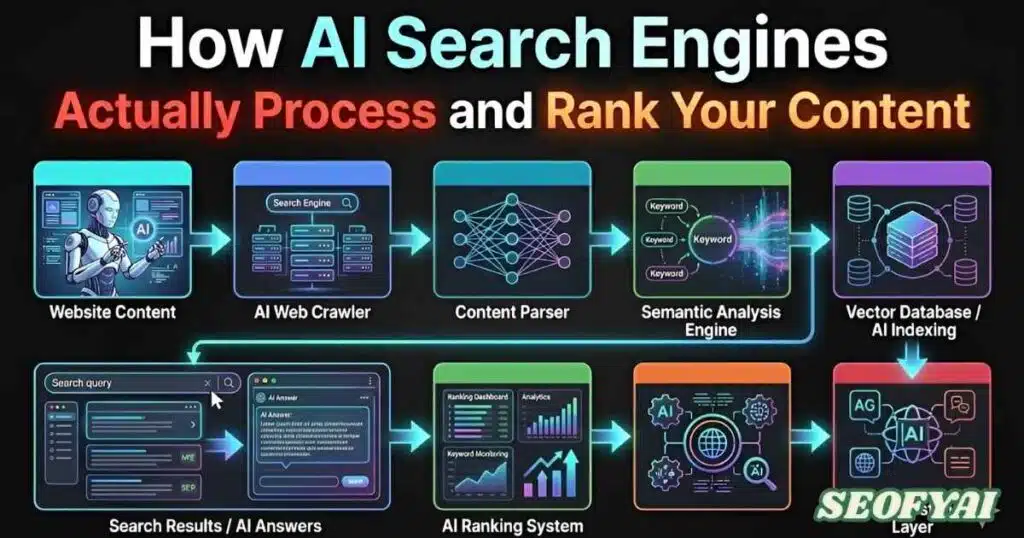
Imagine a massive digital librarian responsible for organizing billions of documents every second. This librarian doesn’t simply read titles. Instead, it studies meaning, credibility, freshness, and usefulness. AI search engines operate similarly. They examine sentence relationships, topical depth, multimedia relevance, and audience engagement before deciding rankings. Businesses using AI-driven content strategy and AI visibility tracking therefore create content designed for understanding rather than keyword repetition.
Search engines now depend heavily on entity recognition. An entity refers to a recognizable topic, person, place, or concept connected through semantic relationships. For example, an article discussing “electric vehicles,” “battery charging,” and “Tesla infrastructure” forms a strong semantic cluster even without repeating identical phrases. This shift makes search engine rankings, AI marketing analytics, and contextual optimization far more important than exact-match keywords.
Core Ranking Signals AI Search Platforms Prioritize
Modern AI systems evaluate expertise, authority, trustworthiness, freshness, and engagement quality simultaneously. They monitor user interaction patterns such as bounce rates, dwell time, click behavior, and content satisfaction. Websites using content gap analysis, AI keyword tracking, and advanced engagement monitoring usually outperform competitors because they align more closely with audience expectations.
Search engines also prioritize content structure. Clear headings, conversational formatting, semantic flow, and structured data improve AI comprehension significantly. Websites implementing SEO reporting automation, AI search analytics, and schema optimization often achieve stronger visibility because search engines can process their information efficiently.
Vector search technology transformed ranking systems even further. Instead of matching exact phrases, AI models map relationships between concepts mathematically. This allows search engines to understand meaning rather than isolated words. Businesses focusing on semantic optimization therefore gain broader visibility across conversational searches and AI-generated answers.
A SaaS company in New York experienced this firsthand. Their blog posts targeted exact keywords aggressively yet failed to rank consistently. After restructuring content around semantic intent clusters and conversational questions, rankings improved dramatically. AI systems rewarded depth and context rather than repetitive optimization tactics.
Another important ranking factor involves trust signals. Search engines increasingly evaluate author credibility, source references, content originality, and audience trust indicators. Websites lacking authority struggle to appear in AI-generated summaries even when keyword optimization appears strong. This is why businesses now combine technical SEO with brand authority development.
Top Benefits of Using AI for Search Visibility Monitoring
One of the biggest benefits of AI-powered monitoring involves speed. Traditional SEO reporting often required days or weeks of manual analysis. Modern systems process enormous amounts of search data instantly. Businesses using AI-assisted SEO, SEO workflow automation, and predictive analytics identify ranking shifts before traffic losses become serious.
Real-time insights provide a massive competitive advantage. AI monitoring platforms track competitor movements, search volatility, and algorithmic changes continuously. This allows marketing teams to react immediately instead of waiting for monthly reports. Companies focused on search ranking improvements, AI competitor analysis, and adaptive optimization often recover from ranking disruptions much faster than slower competitors.

Another major benefit involves automation efficiency. SEO teams once spent countless hours collecting spreadsheets, checking rankings manually, and reviewing technical errors. AI systems now automate these repetitive tasks completely. Businesses implementing technical SEO monitoring, website visibility tracking, and predictive automation reduce workload while improving accuracy.
A technology startup in Austin used AI-driven monitoring to identify declining visibility for cloud security searches. Their platform detected emerging concerns around AI privacy risks weeks before competitors reacted. After publishing educational content and updating landing pages, the company gained substantial organic traffic growth during a critical industry trend shift.
AI monitoring also improves decision-making quality. Traditional SEO often relied on assumptions and guesswork. Modern systems analyze behavioral data, conversational trends, and semantic gaps scientifically. Businesses using AI search tools and intelligent reporting gain clearer insights into audience intent and market opportunities.
The financial impact can be significant. Faster optimization cycles often reduce wasted advertising budgets because companies understand which topics generate meaningful traffic. AI-powered monitoring therefore improves both visibility and marketing efficiency simultaneously.
Another advantage involves cross-platform visibility analysis. Search behavior now extends beyond Google alone. Users increasingly rely on conversational AI assistants, voice search devices, and predictive recommendation systems. Businesses using strategies to improve search visibility with AI gain stronger visibility across multiple digital environments rather than depending entirely on traditional search engines.
Essential AI SEO Tools and Technologies You Need
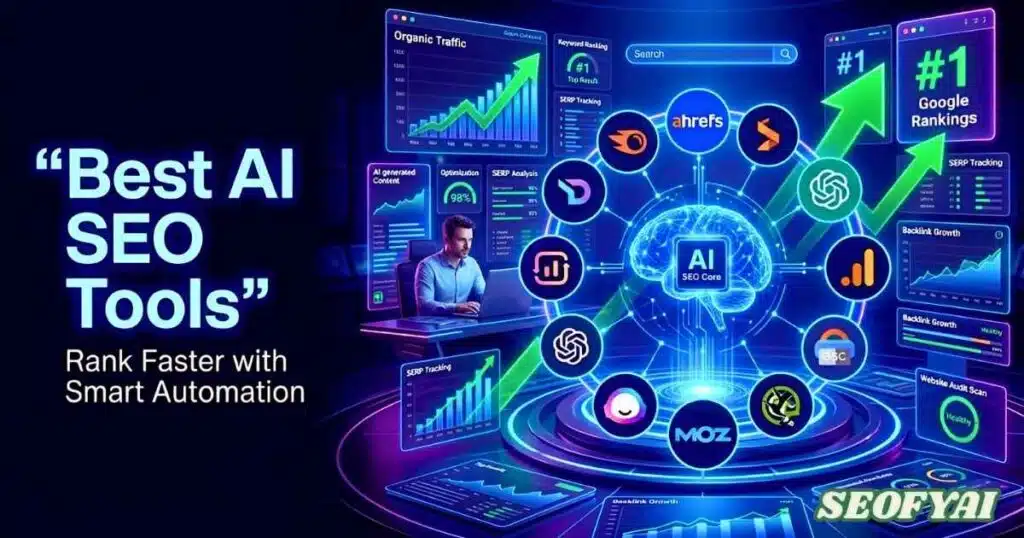
Modern SEO success requires a complete ecosystem of intelligent technologies. Businesses can no longer rely on a single ranking tracker or keyword research tool. Instead, successful organizations combine automation, semantic analysis, and predictive intelligence together. Companies asking how AI improves SEO strategy often discover that integrated workflows create the strongest results.
AI-driven SEO tools now specialize in different functions. Some platforms focus on semantic keyword analysis while others prioritize technical auditing or predictive forecasting. Businesses using AI tools for keyword monitoring, behavioral analytics, and intent mapping systems gain a broader understanding of audience expectations.
| AI SEO Technology | Main Function | Business Benefit |
| AI Rank Tracking Tools | Monitor search fluctuations | Faster optimization decisions |
| NLP Optimization Platforms | Improve semantic relevance | Better contextual rankings |
| Predictive Analytics Systems | Forecast ranking changes | Proactive strategy planning |
| Technical SEO Crawlers | Detect site errors | Improved site performance |
| AI Reporting Dashboards | Simplify data interpretation | Faster strategic insights |
One critical category involves automation platforms designed to monitor keyword rankings automatically. These systems scan search engines continuously and identify fluctuations instantly. Instead of manually checking rankings, businesses receive automated alerts whenever visibility changes significantly.
Another important technology category focuses on AI search appearance tracking. Modern search results often display AI-generated snippets, summaries, and interactive answer boxes. Traditional SEO software rarely tracks these elements accurately. Advanced monitoring platforms therefore analyze how brands appear inside conversational search experiences.
Content optimization platforms also became extremely valuable. Businesses now depend on AI content recommendations, semantic scoring, and contextual relevance analysis to improve topical authority. These systems identify missing subtopics, weak semantic relationships, and readability problems that traditional SEO audits might overlook.
However, over-automation creates serious risks. Some businesses publish entirely machine-generated articles lacking originality or expertise. Search engines increasingly detect shallow content patterns. Successful organizations therefore combine automation with skilled human editing. They use automated SEO audits and intelligent recommendations to guide strategy while maintaining authentic expertise and brand voice.
Another growing trend involves predictive competitor intelligence. Businesses using AI-powered competitor research platforms monitor emerging market trends before competitors react. This capability allows companies to publish timely content and dominate evolving search topics earlier.
Optimizing Your Content Structure for AI Recognition
Content structure now plays a massive role in search visibility. AI systems prefer information that feels organized, conversational, and easy to understand. Websites with poor formatting often struggle to appear inside AI-generated summaries even when the information itself remains valuable. Businesses implementing monitor ChatGPT search visibility, semantic formatting, and conversational optimization usually achieve stronger engagement metrics.
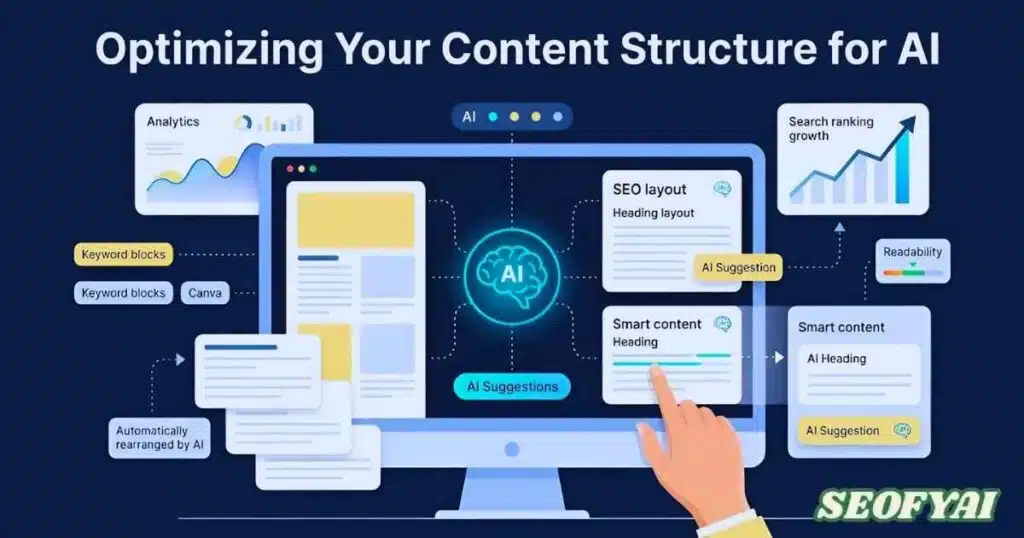
Modern search engines analyze readability, logical flow, and topic relationships carefully. Long walls of text create confusion for both users and AI systems. This is why companies now use AI-driven search intelligence, modular content structures, and entity-focused formatting to improve comprehension.
Structured headings also help search engines interpret content hierarchy. AI systems use headings to understand topic relationships and semantic importance. Businesses attempting to optimize content for AI search engines therefore create logical article frameworks with contextual subtopics and natural transitions.
Paragraph length matters as well. Shorter paragraphs improve readability and reduce cognitive fatigue for readers. Search engines notice engagement improvements when users remain active longer on pages. Companies using strategies to improve organic rankings using AI frequently redesign content layouts alongside technical optimization.
| Traditional SEO Formatting | AI-Friendly Formatting |
| Long text blocks | Short modular sections |
| Exact keyword repetition | Semantic keyword diversity |
| Minimal structure | Rich heading hierarchy |
| Weak contextual flow | Conversational readability |
FAQ sections became increasingly important in modern optimization. AI systems frequently pull answers directly from structured question-and-answer content. Businesses implementing conversational FAQs improve visibility across voice search and AI-generated responses simultaneously.
Internal linking strategies also influence AI understanding. Search engines analyze how pages connect semantically across a website. Strong internal linking structures therefore strengthen topical authority and improve crawl efficiency.
Visual content optimization matters too. AI systems now analyze image relevance, alt text quality, and multimedia engagement signals. Websites using optimized visuals often achieve stronger user engagement and improved AI interpretation.
How to Implement AI Monitoring: Step-by-Step Process
Implementing AI SEO monitoring starts with a complete visibility audit. Businesses first examine rankings, traffic patterns, engagement metrics, and content performance. This process identifies weaknesses before optimization begins. Companies using AI-based SEO recommendations and semantic auditing tools gain clearer insights into hidden performance gaps.
The next step involves defining measurable goals. Some businesses focus on increasing traffic while others prioritize AI-generated visibility or local search dominance. Organizations implementing strategies to track visibility across Google and AI search often establish separate KPIs for conversational search systems and traditional rankings.
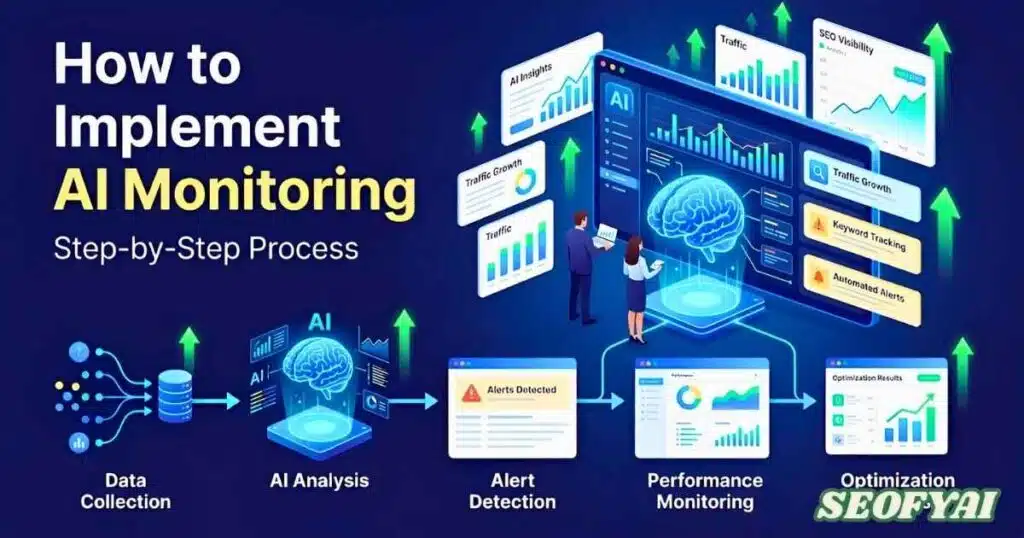
After goal setting, businesses configure intelligent monitoring systems. These platforms track competitor movements, semantic shifts, and engagement trends automatically. Companies using systems to monitor SEO performance automatically reduce manual workload significantly while improving strategic responsiveness.
Content optimization follows implementation. Businesses update outdated articles, expand semantic depth, and improve conversational relevance. Companies using AI content gap detection often discover missing subtopics competitors already dominate.
A healthcare organization in Miami experienced declining traffic despite publishing consistent medical content. Their monitoring system later identified weak semantic coverage for patient-focused conversational searches. After restructuring articles around real patient questions and improving readability, visibility improved dramatically.
Continuous monitoring remains essential after setup. Search behavior evolves constantly. Businesses therefore review AI ranking fluctuation alerts, engagement reports, and algorithmic trends regularly to maintain performance stability.
Technical optimization also matters during implementation. Slow websites, broken schema markup, and crawl errors reduce AI comprehension significantly. Companies therefore combine semantic optimization with technical improvements for stronger results.
Team collaboration becomes easier through automation as well. Marketing teams, writers, and developers can access centralized dashboards showing performance insights clearly. This improves workflow efficiency and decision-making speed.
Real-World Use Cases: When and How to Apply AI SEO Monitoring
Different industries apply AI SEO monitoring differently depending on customer behavior and competitive pressure. Ecommerce businesses often prioritize product visibility and pricing trends. Healthcare organizations focus more heavily on trust signals and informational authority. SaaS companies monitor emerging technology conversations constantly.
Retail brands increasingly depend on AI SEO reporting system platforms to monitor product visibility across conversational shopping searches. AI-generated shopping assistants now influence purchase decisions significantly. Businesses therefore optimize content for recommendation systems rather than simple product rankings alone.
Professional service industries also benefit heavily from AI-driven optimization. Law firms, accountants, and consultants now compete inside conversational AI responses where authority and trust matter enormously. Companies implementing AI search result monitoring identify how AI systems reference their expertise compared to competitors.
| Industry | Main SEO Challenge | AI Monitoring Solution |
| Ecommerce | Product ranking instability | Predictive trend analysis |
| Healthcare | Trust and authority evaluation | Semantic credibility monitoring |
| SaaS | Rapid topic competition | Intent forecasting |
| Professional Services | Conversational visibility | Localized AI optimization |
A Chicago legal firm adopted AI-assisted keyword optimization after noticing declining local inquiries. Their monitoring platform revealed weak visibility for conversational legal searches such as “best divorce lawyer for fathers.” After restructuring content around natural client language, consultations increased noticeably.
Another powerful use case involves local SEO. Businesses using visibility tracking for professional services monitor conversational searches tied to geographic intent. AI systems increasingly personalize local results based on behavior, reviews, and conversational relevance rather than proximity alone.
Media companies also benefit significantly from predictive monitoring. News publishers use AI-driven systems to identify emerging topics before they trend widely. This allows faster content production and stronger visibility during breaking events.
Educational organizations increasingly optimize for AI-generated learning summaries as well. Universities and online learning platforms now structure educational content around conversational student questions and semantic relevance.
Common Limitations and Challenges of AI SEO Tools
Despite their advantages, AI SEO platforms still present important limitations. Data inconsistencies remain common because different tools use varying methodologies. Businesses using an AI SEO automation platform should therefore compare insights carefully instead of depending on one source entirely.
Another challenge involves algorithm volatility. Search engines change constantly. AI-generated answer systems also evolve rapidly. Strategies working today may lose effectiveness tomorrow. Companies relying heavily on search visibility analytics must therefore maintain flexible optimization approaches.
AI hallucinations create additional problems. Some tools generate inaccurate recommendations or misleading optimization suggestions. Human oversight remains extremely important. Businesses using AI search monitoring software should validate recommendations carefully before implementing major changes.
Cost also presents barriers for smaller organizations. Enterprise-grade monitoring systems often require substantial investment. However, affordable tools increasingly offer strong functionality suitable for growing businesses.
Content authenticity remains another concern. Over-automated websites often sound robotic and repetitive. Search engines increasingly reward originality and expertise instead of mass-produced material. Businesses therefore combine automation with authentic storytelling and human expertise.
Privacy regulations also affect AI monitoring strategies. Data collection practices continue evolving due to legal and ethical concerns. Companies must ensure compliance while maintaining effective analytics systems.
Technical complexity can slow adoption as well. Many businesses struggle to interpret advanced SEO analytics correctly. Training and education therefore remain important parts of successful implementation.
Measuring Success: KPIs and Metrics That Actually Matter
SEO success in 2026 depends on much more than rankings alone. Businesses now evaluate engagement quality, semantic authority, and AI-generated visibility together. Companies implementing an advanced AI search engine optimization strategy therefore monitor broader performance indicators rather than isolated keywords.
Search visibility scores became one of the most important metrics in modern SEO. These scores evaluate overall presence across traditional search engines, AI-generated summaries, and conversational systems simultaneously. Businesses using comprehensive monitoring gain clearer understanding of actual audience reach.
Engagement quality metrics also matter enormously. Search engines increasingly analyze dwell time, interaction depth, and user satisfaction signals. Websites generating strong engagement often achieve better rankings because AI systems interpret those behaviors as indicators of content usefulness.
Conversion quality provides another critical measurement. High traffic means little if users never convert into customers or leads. Businesses therefore analyze audience intent alongside visibility metrics to evaluate real marketing value.
Topical authority growth also influences long-term performance. Websites consistently publishing expert-level content around related subjects usually gain stronger semantic trust over time. AI systems reward this consistency heavily.
Businesses should monitor AI-generated search appearances too. A page may receive fewer clicks yet still generate substantial brand exposure through AI summaries and conversational assistants. Visibility therefore extends beyond traditional traffic metrics now.
Future-Proofing Your SEO Strategy with AI
Search technology will continue evolving rapidly beyond 2026. AI-generated answers, voice assistants, predictive search, and multimodal experiences already reshape digital discovery. Businesses asking how can an ai search monitoring platform improve seo strategy must understand that adaptability determines future visibility.
Voice search continues expanding across mobile devices, smart homes, and automotive systems. Search queries now sound increasingly conversational. Companies investing early in semantic optimization and intelligent monitoring systems gain stronger positioning for future search behaviors.
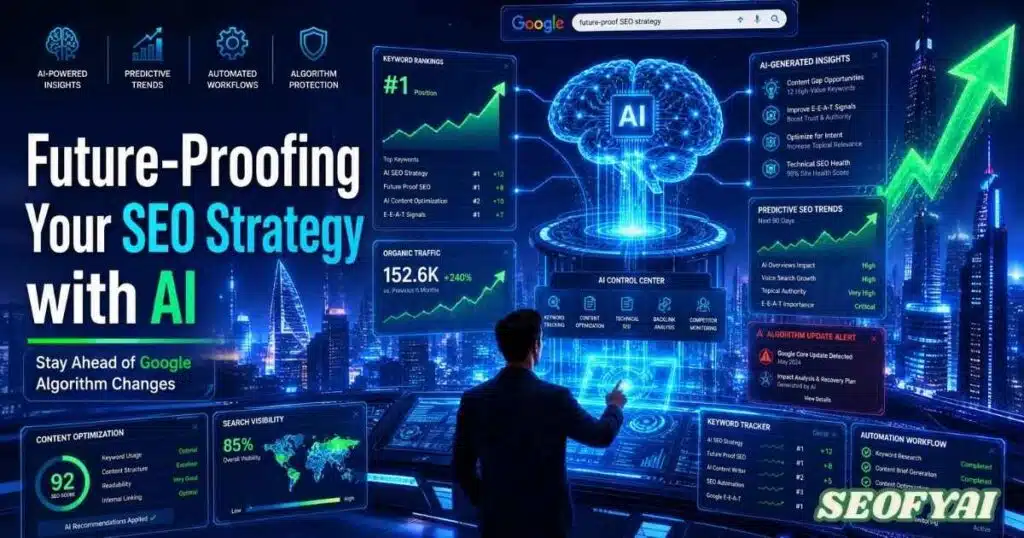
AI personalization also changes how users discover information. Search engines increasingly tailor results based on context, behavior, and preferences. Businesses therefore need flexible content ecosystems rather than rigid keyword-focused strategies.
Visual search technology grows rapidly too. Users increasingly search using images, screenshots, and video clips instead of text alone. Search engines now interpret multimedia context alongside written content.
Brands focusing on expertise, trust, and contextual depth will likely dominate future search environments. AI systems increasingly prioritize authentic authority instead of manipulative optimization tactics.
The companies succeeding in future SEO landscapes will combine automation with creativity. They will use intelligent systems for efficiency while maintaining human expertise, emotional storytelling, and authentic audience connection.
Conclusion
Artificial intelligence has permanently changed how websites compete in search results. Businesses that still rely on outdated SEO methods will struggle to maintain visibility as AI-driven search engines continue evolving. Understanding how can an ai search monitoring platform improve seo strategy helps companies adapt faster, improve rankings, and uncover new growth opportunities before competitors react.
Modern brands now depend on AI-assisted SEO, AI search analytics, search visibility analytics, AI content optimization, and SEO workflow automation to track performance and strengthen digital authority. As search engines become smarter and more personalized, businesses using intelligent monitoring platforms will gain stronger organic visibility, better audience engagement, and long-term SEO success in the rapidly changing digital marketplace.
Frequently Asked Questions (FAQ)
How can an AI search monitoring platform improve SEO strategy compared to manual methods?
AI search monitoring platforms automate real-time tracking, identify ranking opportunities instantly, and provide data-driven insights that manual SEO analysis would take weeks to uncover.
What are the best AI SEO techniques for optimizing search visibility in 2024?
Top AI SEO techniques include automated keyword clustering, predictive content gap analysis, real-time SERP monitoring, AI-powered schema markup generation, and intelligent competitor tracking.
How is AI changing search and what does it mean for SEO strategy?
AI is transforming search through semantic understanding, entity recognition, and personalized results, requiring SEO strategies to focus on topical authority, user intent, and structured data rather than just keywords.
Can I use AI for SEO optimization free, or do I need paid tools?
Free AI SEO tools like Google Search Console with AI insights, ChatGPT for content optimization, and Bing Webmaster Tools offer basic optimization, while paid platforms provide advanced monitoring, automation, and competitive analysis.
How to use AI in SEO writing while maintaining quality and rankings?
Use AI as a research and optimization assistant—let it analyze top-ranking content, suggest semantic keywords, and structure outlines, but always add human expertise, original insights, and brand voice for best results.

Abdul Manan is a professional SEO content creator and AI-SEO strategist at seofyai.com. He specializes in helping businesses rank higher on Google through AI-powered, data-driven content optimization. Connect on LinkedIn or visit seofyai.com for expert SEO tips.