

What Is ChatGPT and How It Helps Bloggers
Content creation looks nothing like it did three years ago. Learning how to use ChatGPT for blogging has transformed how creators plan, write, and optimize posts, since the process helps bloggers generate ideas, structure articles, and improve writing speed without sacrificing quality. Many writers now lean on AI content creation, blog writing automation, and prompt engineering to produce high-quality posts faster than manual drafting ever allowed.
This method saves time while improving content consistency and creativity at once, a combination that used to feel impossible before AI entered the workflow. As competition grows online, mastering how to use ChatGPT for blogging gives both beginners and professionals a real advantage, letting them scale content production while keeping originality and reader engagement intact.
ChatGPT vs Other AI Tools (Claude & Gemini) — Quick Comparison
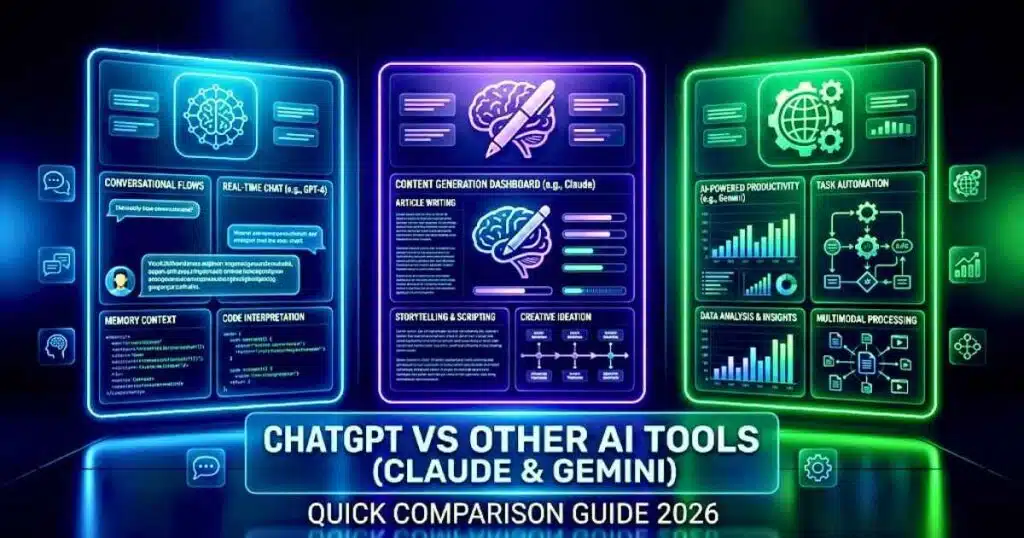
Picking the right tool matters just as much as knowing how to use ChatGPT to plan, write, and optimize blog posts. ChatGPT competes directly with Claude and Gemini in the AI writing assistant space, and each tool brings different strengths to a blogger’s workflow rather than one clearly beating the others across the board.
ChatGPT is widely seen as a top AI writing tool for bloggers because it balances creativity with structure better than most alternatives. Claude tends to produce deeper reasoning on complex topics, while Gemini connects more tightly with Google’s own systems and search data.
Which Tool Fits Your Blogging Workflow Best
For bloggers focused specifically on how to use ChatGPT for blogging at scale, its speed and flexibility across drafting, outlining, and editing make it the practical default for most content calendars. Claude suits writers who need nuanced, research-heavy pieces, and Gemini fits teams already living inside Google Workspace and Search Console.
Most serious bloggers end up using ChatGPT as their primary tool and keeping Claude or Gemini on hand for the specific tasks where they genuinely outperform it.
| Tool | Strength | Weakness |
| ChatGPT | Fast drafting and structured writing | Sometimes generic output |
| Claude | Deep reasoning and tone quality | Slower content generation |
| Gemini | Strong Google integration | Less creative control |
Many creators now compare these tools under AI content creation tools 2026 to decide which fits their workflow best. Still, ChatGPT remains a leader in generative AI for content marketing because of its balance between speed and usability.
How to Brainstorm High-Quality Blog Topics Using ChatGPT
Strong blogs always begin with strong ideas. When you explore how to use ChatGPT to plan, write, and optimize blog posts, brainstorming becomes your first big advantage. ChatGPT helps generate blog topic ideas with AI based on audience interest and search trends.
You can use it for AI brainstorming for content by asking for niche-specific topics. For example, bloggers in the USA often request finance, health, or tech ideas tailored to their audience. This improves relevance and increases engagement.
A simple workflow includes combining ChatGPT suggestions with a content calendar with ChatGPT. This helps you organize ideas into weekly or monthly plans. Over time, you build a strong pipeline of topics that support consistent publishing.
Step-by-Step Process to Generate Blog Post Ideas with ChatGPT
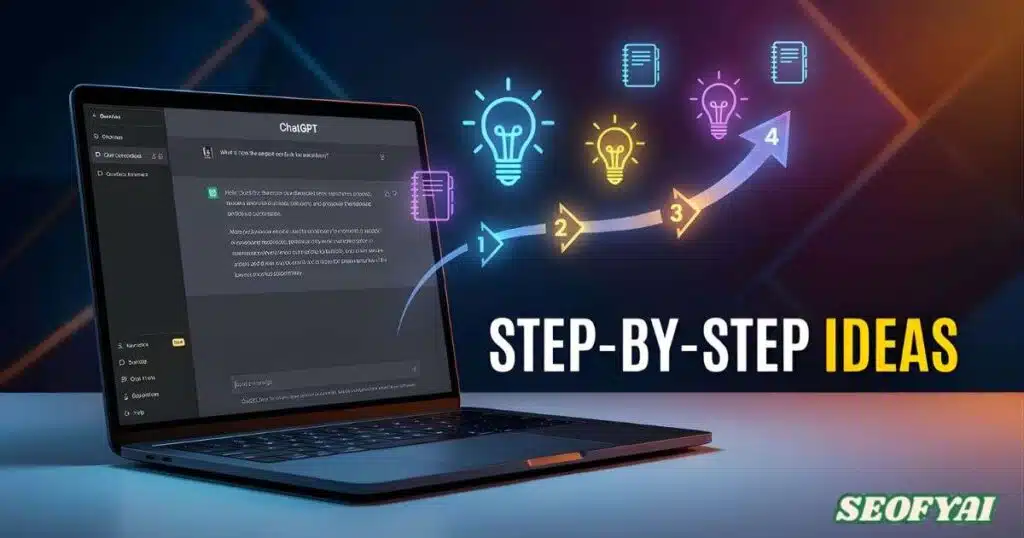
Idea generation becomes structured when you follow a clear process. First, define your niche. Then ask ChatGPT for broad topic clusters. Next, refine those ideas into specific angles. This is the core of how to prompt ChatGPT for writing effectively.
Many writers now rely on ChatGPT prompts for bloggers to speed up planning. Instead of guessing, you guide the AI with context prompts. This improves accuracy and reduces irrelevant outputs.
A simple workflow looks like this. First, request general topics. Second, narrow them based on audience. Third, validate with SEO tools. This creates a strong content creation workflow with AI that supports long-term blogging success.
How to Create a Blog Outline Using ChatGPT
Outlining is where ideas become structured content. When learning how to use ChatGPT to plan, write, and optimize blog posts, this step is essential. ChatGPT helps with outlining a blog post with AI by generating headings and subheadings based on intent.
A good outline improves readability and SEO. It also ensures your article follows a logical flow. Many bloggers use AI prompt templates for content to get better structured outlines from ChatGPT.
Example Workflow for Blog Outlining
Start by giving ChatGPT a topic and audience. Then ask for a full structure with H1, H2, and H3 sections. This process supports content creation workflow with AI and reduces planning time significantly.
Writing a Complete Blog Post with ChatGPT (Drafting Process)
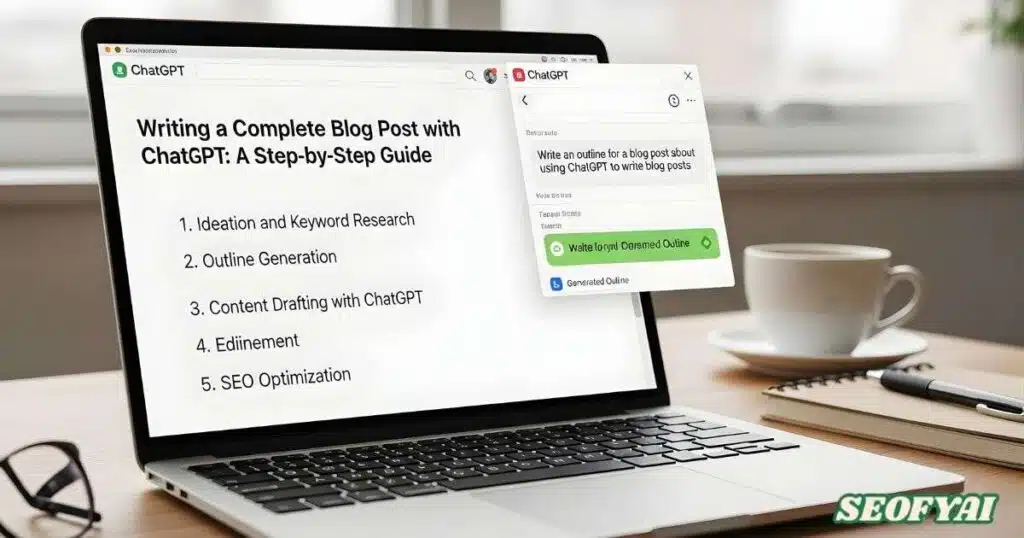
Writing becomes easier when you break it into steps. Instead of generating full articles at once, you guide ChatGPT section by section. This improves blog post drafting process quality and reduces repetition.
Many creators now prefer to write blog post with AI while adding personal insights later. This creates a balance between automation and originality. It also supports SEO blog writing with AI strategies that improve visibility.
A useful method is combining AI drafts with human editing. This is known as human-in-the-loop content writing, where AI handles structure and humans refine meaning. It leads to more natural and engaging content.
Editing and Improving Your Content with ChatGPT
Editing is where average content becomes great, and skipping this step is the fastest way to waste everything ChatGPT just helped you draft. When you know how to use ChatGPT to plan, write, and optimize blog posts, editing carries just as much weight as the first draft. ChatGPT sharpens grammar, clarity, and flow through editing AI-generated content tools built directly into how you prompt it.
It also supports humanizing AI-generated text, which makes content sound less like a machine wrote it and more like you did. Ask it to simplify sentences or adjust tone for US readers, and readability improves almost instantly without a full rewrite.
Strong bloggers go a step further and focus on maintaining brand voice with AI, so every article feels consistent instead of reading like five different writers took turns. Over time, you can even train prompts on your own writing samples until the output genuinely sounds like you, not like generic AI filler.
Common Mistakes to Avoid When Using ChatGPT for Blogging
Even powerful tools produce weak content when misused, and the mistakes tend to repeat across nearly every beginner’s workflow. Relying too heavily on automation tops the list; you can absolutely use ChatGPT to write full blog posts, but overuse quietly drains originality until every article starts sounding the same.
Poor prompting causes the second most common failure. Without clear instructions, AI defaults to generic text that weakens overall content quality, and many beginners compound the problem by skipping fact-checking entirely, which erodes reader trust fast once errors surface.
To fix this, train AI to write consistently in your tone across every post, and refine your prompts regularly using sharper context prompts rather than vague one-line requests. That single habit closes the gap between content that reads as AI-generated and content that reads as genuinely yours.
Tips to Make Your AI-Written Blog Posts More Engaging
Engaging content requires personality. Even when you rely on AI, you must guide it carefully. When mastering how to use ChatGPT to plan, write, and optimize blog posts, always add storytelling elements and real-world examples.
You can improve engagement by blending AI drafts with human creativity. This creates AI writing that sounds natural and feels less robotic. Readers connect better with content that feels personal and relatable.
Another key tip is balancing structure with emotion. AI handles structure well, but humans add meaning. This combination leads to more how to prompt ChatGPT for writing success and stronger audience retention.
Why Blogging Still Matters for Your Business (Beyond SEO)
Blogging remains powerful even in the AI era. When you understand how to use ChatGPT to plan, write, and optimize blog posts, you unlock scalable content creation. Blogs still drive traffic, leads, and authority.
Businesses in the USA use blogs for education and trust-building. Even with automation, consistent blogging with AI help remains essential for long-term growth. It supports brand awareness and customer engagement.
More importantly, blogging builds digital authority. While social media trends fade quickly, blogs stay searchable for years. That makes SEO blog writing with AI a long-term investment in visibility and credibility.
Final Thought
ChatGPT is not just a writing tool. It is a full AI-powered writing workflow system when used correctly. The real success comes from combining AI speed with human creativity. That balance creates content that ranks, engages, and converts.
conclusion
In conclusion, mastering how to use ChatGPT for blogging gives you a powerful edge in today’s fast-moving digital world. It allows you to plan smarter, write faster, and refine your content with far less effort than traditional methods. When you consistently use ChatGPT to write blog posts, you unlock a smoother workflow that supports creativity and productivity at the same time.
Tools like ChatGPT for content writing and an AI blog post generator make it easier to stay consistent, especially in competitive niches. However, real success comes when you blend AI efficiency with your own voice, ensuring every piece feels authentic, engaging, and valuable for your readers.
Frequently Asked Questions
Can you use ChatGPT for blogs?
Yes, you can use ChatGPT for blogs to generate ideas, write drafts, and improve content, but human editing is important for accuracy and originality.
How long does it take to make $1000 per month blogging?
It usually takes around 6–12 months to make $1000 per month blogging, depending on niche, traffic strategy, and consistency.
Is blogging dead due to AI?
No, blogging is not dead due to AI; it has evolved, and high-quality, human-guided content still performs very well.
How I used ChatGPT for blogging a beginner’s journey?
A beginner can use ChatGPT for blogging by starting with ideas, creating outlines, and gradually refining AI-generated drafts with personal input.
Which AI is best for blogging?
ChatGPT is one of the best AI tools for blogging because it helps with writing, brainstorming, and SEO-friendly content creation.

Abdul Manan is a professional SEO content creator and AI-SEO strategist at seofyai.com. He specializes in helping businesses rank higher on Google through AI-powered, data-driven content optimization. Connect on LinkedIn or visit seofyai.com for expert SEO tips.