
Understanding chatgpt ranking factors is crucial in today’s rapidly evolving digital landscape, where AI-driven platforms are reshaping how users discover information. As tools like ChatGPT continue to influence search behavior, traditional SEO alone is no longer enough. Content creators must now focus on how AI evaluates relevance, context, and authority when generating responses.
By leveraging AI search optimization, content relevance signals, semantic SEO, user intent matching, and AI content visibility, you can significantly improve your chances of being featured in AI-generated answers. Adapting to these changes early ensures sustainable traffic growth and stronger positioning in next-generation search ecosystems.
What Are ChatGPT Ranking Factors and Why They Matter
Search stopped being just links on a page the moment AI started answering questions directly. ChatGPT ranking factors decide which sources actually appear inside those answers, and they include content-answer fit, query relevance, and AI response alignment — the signals that shape retrieval and final source selection long before a human ever sees the result.
AI rewards clarity and alignment over keyword volume. Strong content relevance signals and semantic SEO for AI improve your odds significantly, since better AI content discovery starts with content built to match intent rather than chase a search term.
If your structure matches what the query actually needs, you improve your ability to influence ChatGPT ranking factors instead of hoping for a lucky citation.
How ChatGPT Actually Works (LLMs vs Search Engines)
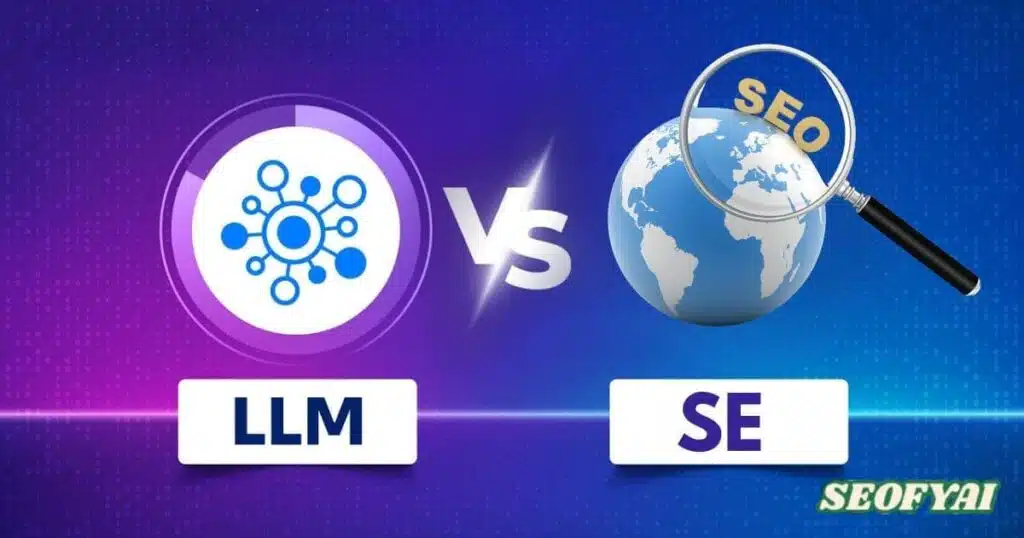
Traditional search engines index; AI systems retrieve and generate. Large language models paired with retrieval augmented generation (RAG) analyze context through embeddings and cosine similarity, focusing on meaning instead of matching exact keywords the way a 2015-era crawler would.
AI uses natural language processing and a trained model to build grounded responses, studying multiple sources before performing AI summarization. This explains why AI indexing differs so sharply from traditional retrieval, and it’s exactly why ChatGPT ranking factors depend on genuine contextual understanding rather than backlink counts.
The Retrieval → Synthesis → Citation Flow
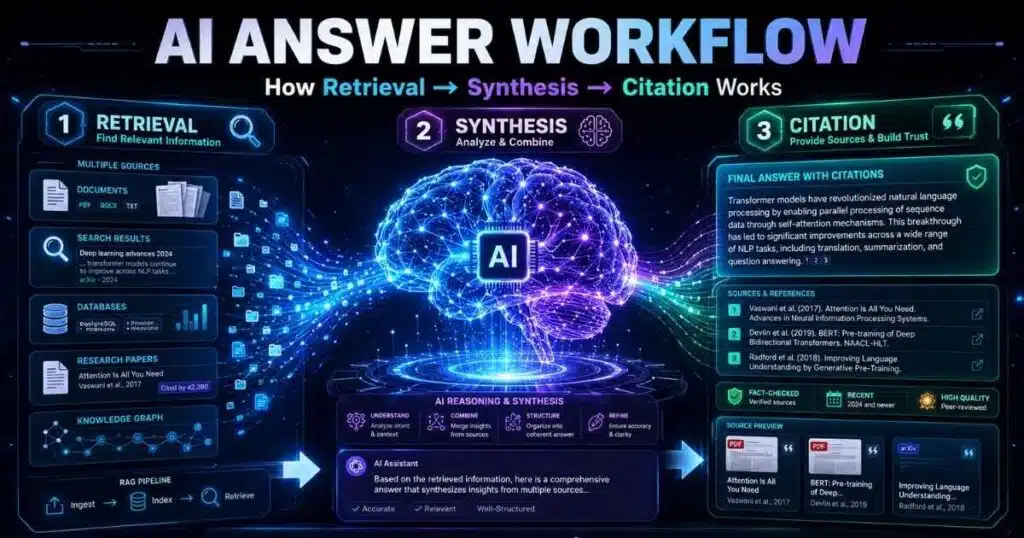
Every query triggers the same underlying sequence: retrieval first, analysis second, source selection third. AI checks semantic alignment at each stage and builds answers using text generation models trained to prioritize accuracy over length.
This flow defines citation likelihood directly, and understanding it is the fastest way to increase your odds once you know which ChatGPT ranking factors influence each stage of the process.
Top ChatGPT Ranking Factors You Need to Know
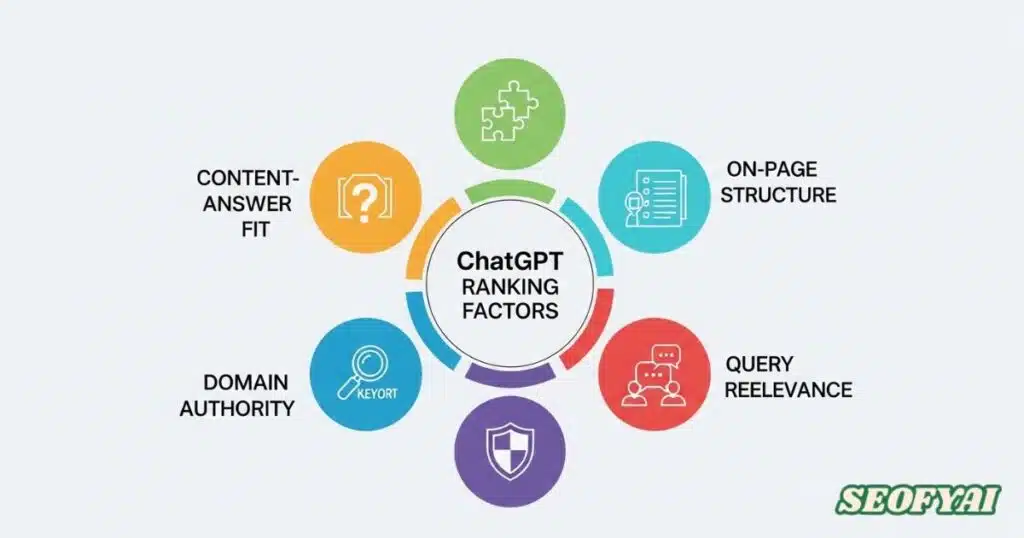
Several elements define success. The most important ChatGPT ranking factors include content-answer fit, on-page structure, and content consensus. These work together with domain authority and query relevance to shape outcomes.
The table below explains how these factors influence AI visibility:
| Ranking Factor | Impact Level | Role |
| content-answer fit | Very High | Improves alignment with AI answers |
| on-page structure | High | Enhances readability and parsing |
| domain authority | Medium | Helps retrieval stage |
| query relevance | Medium | Matches user intent |
| content consensus | Medium | Builds trust across sources |
Strong LLM ranking signals and AI citation factors increase your ability to improve AI visibility and follow effective AI SEO best practices.
Content-Answer Fit: The #1 ChatGPT Ranking Factor You Cannot Ignore
Among all chatgpt ranking factors, content-answer fit sits at the very top. Most websites focus on keywords and backlinks while completely missing the signal AI systems care about most — how precisely your content answers the exact question being asked. When your content mirrors conversational intent and semantic meaning, ChatGPT citation probability increases dramatically. This is the single biggest lever you can pull to improve AI search visibility in 2026.
ChatGPT does not rank pages. It selects answers. If your content reads like a direct, confident response to a specific question, AI treats it as a reliable source worth citing. Brands that understand this shift their entire content alignment strategy away from keyword density and toward semantic clarity and contextual completeness.
How Content-Answer Fit Strengthens ChatGPT Ranking Factors
A refined content alignment strategy matches tone to real conversational questions, mirrors AI reasoning patterns, and structures information so clearly that AI can extract and cite it instantly. Writers who master AI-friendly content writing consistently outperform competitors still writing for traditional search engines.
Websites using structured optimization techniques achieve significantly stronger visibility across conversational search environments. BrightEdge research found structured question-answering content receives up to 3x more AI citations than unstructured articles covering the same topic. The brands winning chatgpt ranking factors right now wrote for humans first and structured for AI second.
Does ChatGPT Use Google or Bing Rankings? Reality Explained
Many marketers assume chatgpt ranking factors depend entirely on traditional search engine rankings. However, conversational AI systems prioritize semantic relationships, contextual understanding, and search intent matching more heavily than backlink-driven authority. External search data may support retrieval processes, yet AI-generated answers rely primarily on contextual relevance and structured information quality.
The distinction between SERP rankings and AI responses completely changes how chatgpt ranking factors operate within modern search ecosystems. Search engines rank webpages individually, whereas AI platforms synthesize answers using contextual interpretation.
As a result, natural language search ranking, conversational optimization, and structured content frameworks now outperform outdated backlink-heavy strategies in many AI-driven discovery environments.
Proven Strategies to Optimize for ChatGPT Rankings
Winning AI visibility requires precision. Start with strong content structure (H1, H2, H3) and clear meta description optimization. Maintain strong content hierarchy and improve content readability for both users and AI.
Focus on ChatGPT content optimization and build topical authority. Combine this with keyword relevance and structured formatting. These steps strengthen AI search visibility strategy and help you master how to rank on ChatGPT in competitive spaces.
Common Mistakes That Hurt Your ChatGPT Visibility
Many publishers still rely on outdated tactics that ignore modern chatgpt ranking factors and conversational search behavior. Weak intent matching, shallow content depth, and poorly structured formatting reduce visibility across AI-generated responses. Consequently, websites that overlook semantic relevance and contextual clarity often struggle to maintain consistent AI search exposure.
Excessive keyword repetition weakens chatgpt ranking factors by disrupting semantic alignment and natural language flow. Poor formatting also damages on-page structure, making content harder for AI systems to interpret accurately.
These issues lower AI content visibility, reduce discovery potential, and limit citation opportunities within conversational search environments and AI-driven search results.
Measuring ROI: Can You Track ChatGPT Traffic?
Measuring traffic influenced by chatgpt ranking factors remains challenging because conversational AI attribution differs from traditional analytics systems. However, engagement trends, referral behaviors, and branded search increases often reveal valuable performance signals. Smart marketers analyze these patterns to understand how conversational AI affects visibility and audience interaction over time.
Instead of relying solely on direct attribution, businesses should evaluate chatgpt ranking factors through behavioral changes, citation frequency, and branded mention growth.
Monitoring these indicators strengthens long-term optimization efforts while refining an effective ChatGPT SEO strategy. As AI search evolves, deeper visibility tracking becomes essential for sustainable growth and stronger conversational search performance.
Future of ChatGPT SEO and AI Search
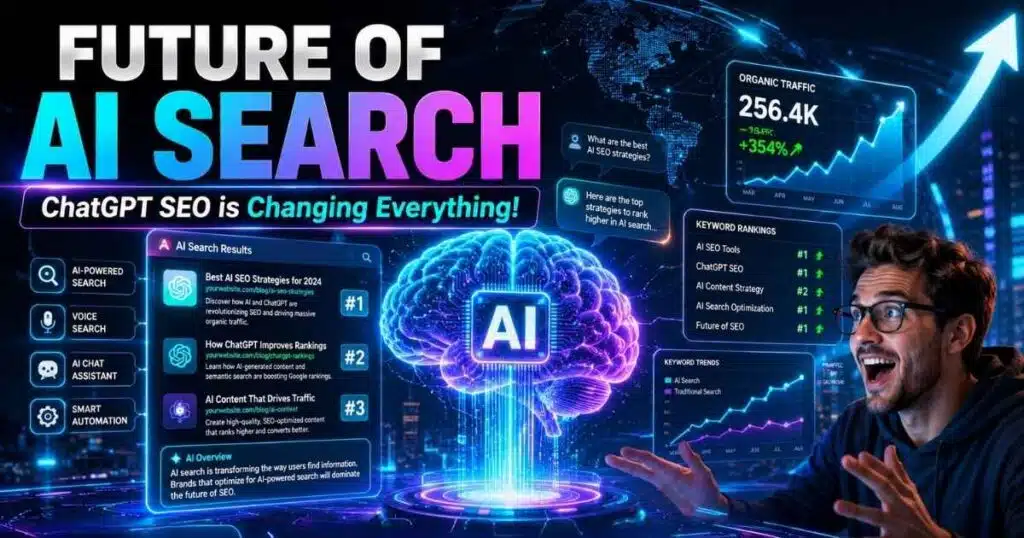
AI continues to evolve fast. Future ChatGPT ranking factors will rely more on context and accuracy. Strong machine learning ranking factors will shape how content is evaluated.
Expect deeper reliance on AI answer engine optimization (AEO) and smarter AI-powered search engines. This will increase demand for content optimization for AI models and push creators to adapt quickly.
Final Takeaways: How to Rank in ChatGPT in 2026
Long-term success with chatgpt ranking factors comes down to three things — clarity, semantic alignment, and strong content-answer relevance. Websites that structure information cleanly while matching conversational search intent gain stronger visibility inside AI-generated responses.
Improving formatting, topical depth, and contextual accuracy helps AI systems interpret your content with greater confidence. Get these right and citation opportunities follow naturally.
Brands investing in AI-friendly content writing, structured optimization, and generative search strategies will dominate conversational search in 2026 and beyond. Strong chatgpt ranking factors emerge when content mirrors human reasoning, solves intent-driven questions, and delivers trustworthy answers consistently.
The businesses winning right now are not the ones with the biggest budgets. They are the ones with the clearest, most relevant content that AI systems trust enough to cite.
Conclusion
Understanding chatgpt ranking factors has become essential for brands competing in the era of conversational AI and generative search. Traditional SEO alone no longer guarantees visibility because AI systems prioritize semantic relevance, contextual accuracy, and content-answer alignment. Businesses that focus on structured formatting, intent-driven writing, and authoritative topical coverage gain stronger opportunities to appear in AI-generated responses.
Moreover, optimizing for conversational search improves citation potential, user engagement, and long-term discoverability across evolving AI ecosystems. As search behavior continues shifting toward intelligent answer engines, mastering chatgpt ranking factors will help websites maintain relevance, strengthen digital authority, and secure sustainable growth in the future of AI-powered search.
Frequently Asked Questions
How to rank no 1 in ChatGPT?
You can’t rank no 1 in ChatGPT; instead, create clear, relevant content that answers questions so AI can cite it.
How does ChatGPT rank?
ChatGPT uses context, meaning, and relevance to generate answers rather than ranking pages like traditional search engines.
What are the 4 types of SEO?
The four types are on-page SEO, off-page SEO, technical SEO, and local SEO.
How to increase your ranking in ChatGPT search?
Focus on clear structure, strong content-answer fit, and user intent to improve visibility in AI-generated responses.
What are the 7 levels of AI?
They include Reactive Machines, Limited Memory, Theory of Mind, Self-aware AI, ANI, AGI, and ASI.

Abdul Manan is a professional SEO content creator and AI-SEO strategist at seofyai.com. He specializes in helping businesses rank higher on Google through AI-powered, data-driven content optimization. Connect on LinkedIn or visit seofyai.com for expert SEO tips.