

Understanding what is an seo content has become essential for every website owner, blogger, and digital marketer in 2026. Search engines now prioritize pages that deliver value, match search intent, and improve user experience. SEO content helps websites attract organic traffic by using smart keyword optimization and well-structured information. Unlike ordinary writing, SEO-focused content combines readability with strategy to improve visibility in search results.
Businesses use SEO articles, landing pages, and guides to connect with readers while supporting higher rankings. A well-written SEO article not only answers questions clearly but also builds trust, authority, and long-term growth in an increasingly competitive digital landscape.
What Is an SEO Content?
Many beginners ask, “What is an seo content?” In simple words, SEO content is online writing created to rank higher in search engines while helping readers solve problems. It combines useful information with smart keyword optimization, proper formatting, and clear content structure. Unlike random blog writing, SEO content follows a strategic approach designed for visibility and engagement.
Strong SEO content balances creativity with technical planning. For example, a travel blog discussing New York restaurants can include local phrases, helpful recommendations, and optimized headings. This method improves website visibility while increasing organic traffic naturally. Good SEO writing never feels robotic. Instead, it reads smoothly while supporting search engine rankings behind the curtain.
Core Elements of SEO Content
| Element | Purpose | SEO Benefit |
| Keywords | Match user searches | Better rankings |
| Headings | Improve structure | Easier crawling |
| Internal Links | Connect pages | Higher engagement |
| Readability | Improve understanding | Better retention |
| Images | Visual support | User satisfaction |
Why SEO Content Matters for Google Rankings
Google scans billions of pages daily. Without optimized content, even valuable websites struggle to appear in google search results. SEO content acts like a digital road sign. It helps search engines understand topics, user value, and page relevance. Businesses that invest in content optimization often gain stronger online authority over time.
Quality content also improves user experience significantly. Readers stay longer when articles answer questions clearly. Longer engagement tells Google that the page offers genuine value. As a result, websites gain stronger ranking content signals. A well-written article can drive leads, sales, and trust for years without paid advertising.
SEO Content vs Normal Content Writing
Traditional content focuses mainly on storytelling or information sharing. SEO writing blends creativity with strategic planning. A novelist may write beautifully yet fail to attract traffic because the article ignores search intent and keyword placement. SEO content solves this issue by aligning writing with what users actually search online.
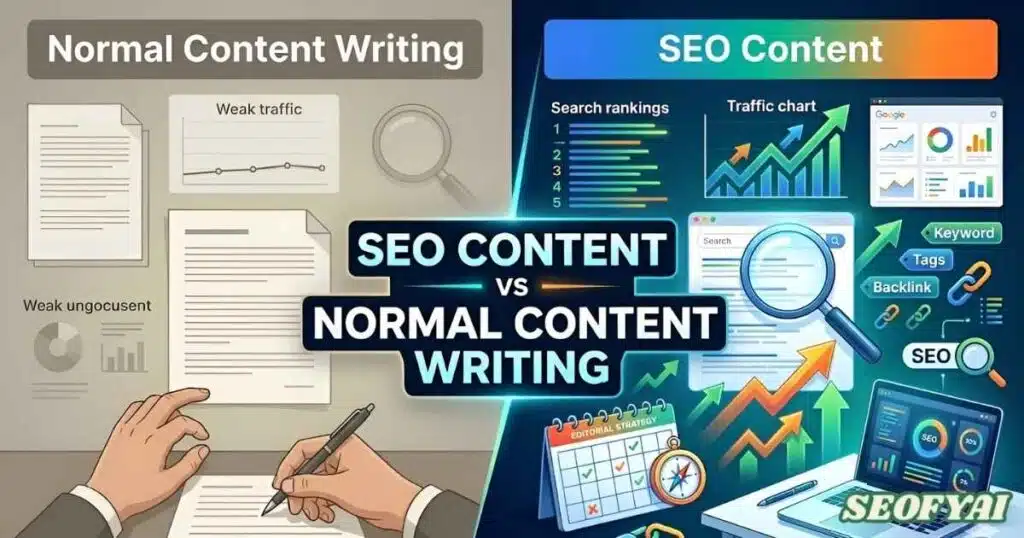
For example, a fitness article titled “Healthy Living Journey” sounds pleasant. However, “Best Morning Workout for Weight Loss” targets specific user needs more effectively. That small difference improves topic relevance and supports stronger on page seo performance. SEO writing still sounds natural. It simply uses structure and optimization more intelligently.
SEO Writing vs Traditional Writing
| Feature | SEO Content | Traditional Content |
| Goal | Rank on Google | Inform or entertain |
| Keywords | Strategically used | Rarely planned |
| Structure | SEO-focused | Flexible |
| Traffic Potential | High | Moderate |
| Search Visibility | Strong | Limited |
Types of SEO Content
SEO content appears in many forms across the internet. Blog articles remain the most common because they attract long-term traffic through educational topics. Businesses also create landing pages, tutorials, service pages, and product descriptions. Each format supports different stages of the customer journey while improving content quality.
Video transcripts and visual guides now play a larger role as well. Google increasingly values multimedia experiences because they improve readable content and accessibility. Ecommerce websites often use seo copywriting techniques for product pages. Meanwhile, educational brands focus on long-form guides and optimized blog posts to establish trust and authority.
How Search Engines Understand SEO Content
Search engines use advanced systems to understand meaning and context. Google no longer relies only on exact keywords. Instead, it studies relationships between words, phrases, and topics using semantic seo. This allows search engines to recognize whether content genuinely answers user questions.
Modern google algorithms also analyze engagement metrics. They measure bounce rate, time on page, and click behavior to evaluate content relevance. Pages with poor structure or weak value often lose rankings quickly. Websites that combine clarity, depth, and strong seo techniques usually perform far better in competitive industries.
Keyword Research for SEO Content Writing
Keyword research forms the backbone of every SEO campaign. Without proper targeting, content becomes invisible online. Writers first identify phrases users type into search engines. This process improves search engine rankings because content aligns with actual demand rather than assumptions.

Long-tail keywords often produce better results for beginners. For example, “best SEO content tips for small businesses” targets a narrower audience with clearer intent. This strategy improves content strategy and increases conversion potential. Smart keyword planning also helps writers understand audience problems before creating articles.
Keyword Types in SEO
| Keyword Type | Example | Purpose |
| Primary Keyword | what is an seo content | Main target |
| LSI Keyword | seo writing tips | Relevance |
| Long-Tail Keyword | how to write seo content | User intent |
How to Write SEO-Friendly Content
Creating SEO-friendly articles requires balance. Writers should first understand the audience before adding keywords naturally. Strong introductions capture attention immediately. Clear headings improve navigation while supporting better content readability. Every paragraph should provide useful insights instead of filler text.
Internal linking also strengthens SEO performance. Linking related pages helps search engines understand website structure while guiding visitors toward more information. Proper keyword placement within headings, introductions, and meta descriptions improves visibility further. Successful SEO writing feels smooth, conversational, and deeply informative.
The best writers also focus on emotional engagement. Articles become memorable when they include relatable examples and practical advice. A beginner reading a beginner seo writing guide should feel encouraged instead of overwhelmed. Simplicity often outperforms complexity because readers prefer clarity over jargon.
Best Prompt for SEO Content Writing
AI tools changed content creation dramatically in recent years. However, results depend heavily on prompt quality. A vague request produces shallow output while detailed prompts create stronger articles. Effective prompts include target audience, keyword goals, desired tone, and article structure.

For example, a strong AI instruction may request a detailed article using seo article optimization, natural transitions, and user-focused explanations. This method helps AI create more valuable drafts. Still, human editing remains essential because emotional tone and originality matter greatly in SEO today.
Many marketers now combine AI efficiency with human creativity. This hybrid approach speeds up production without sacrificing content quality. Businesses using this method often produce more consistent and scalable seo content marketing campaigns.
Common SEO Content Writing Mistakes
Keyword stuffing remains one of the biggest SEO mistakes. Some writers overload articles with repetitive phrases hoping to manipulate rankings. Unfortunately, this damages readability and weakens user experience. Google now penalizes unnatural writing aggressively.
Another major issue involves ignoring search intent completely. Some pages target informational keywords while pushing sales aggressively. Readers quickly leave such pages because expectations are not met. Thin content, poor formatting, and weak research also hurt content optimization significantly.
Writers should avoid copying competitor content directly. Search engines reward originality and depth. Articles offering unique examples, updated information, and practical insights often outperform recycled material. Strong high quality content builds long-term trust and authority.
Best Tools for SEO Content Optimization
SEO professionals rely on various tools for research and analysis. Platforms like Ahrefs and SEMrush help identify ranking opportunities and competitor strategies. These tools improve blog seo strategy by uncovering keyword gaps and traffic trends.

Surfer SEO and Clearscope focus more on content optimization. They analyze competitor pages and suggest keyword improvements. Grammarly helps improve grammar and readable content quality. Google Search Console provides valuable performance insights directly from Google itself.
Writers should avoid depending on tools blindly. Software offers guidance while human understanding creates compelling experiences. The best results appear when strategy, creativity, and optimization work together naturally.
How SEO Agencies Create High-Ranking Content
Professional agencies follow structured workflows when producing SEO content. They begin with audience research, competitor analysis, and keyword mapping. This process supports stronger content strategy while identifying opportunities competitors may overlook.
Agencies also use topic clusters to build authority gradually. Instead of publishing random posts, they connect related articles strategically. This improves topic relevance and helps search engines understand expertise. A website discussing digital marketing may create supporting content around blogging, SEO, email campaigns, and analytics.
Content updates also play a huge role in rankings. Agencies frequently refresh statistics, links, and examples to maintain freshness. Google favors updated pages because they provide more accurate information for readers.
Final Thoughts on SEO Content Writing
SEO content writing continues evolving rapidly. Search engines now reward depth, clarity, and usefulness more than manipulation. Writers who focus on readers while understanding SEO fundamentals gain stronger long-term success online. That is why learning what is an seo content matters more today than ever before.
The future of SEO belongs to brands creating authentic experiences. AI may assist with production yet human creativity still shapes trust and emotional connection. Websites producing valuable content for google ranking while maintaining originality will continue dominating search results in 2026 and beyond.
Conclusion
Understanding what is an seo content is no longer optional for websites that want steady online growth. Search engines now reward pages that provide real value, clear answers, and strong content quality instead of outdated keyword stuffing tricks. Businesses that focus on helpful information, smart keyword optimization, and better user experience build stronger trust with both readers and Google.
SEO content writing is a long-term investment, not a quick shortcut. Well-structured articles, engaging storytelling, and proper on page seo create lasting visibility in competitive industries. Whether you run a blog, ecommerce store, or business website, creating useful and optimized content can improve organic traffic, strengthen authority, and increase conversions over time. The future belongs to websites that combine creativity with strategy while delivering information people genuinely want to read.
Frequently Asked Questions
What is meant by SEO content?
SEO content refers to online material created to rank higher in search engines while helping readers solve problems. It combines useful information with strategic optimization techniques like keywords, structure, and readability improvements.
How do beginners write SEO content?
Beginners should start with audience research and keyword planning. Learning how to write seo content becomes easier when writers focus on clarity, value, and proper formatting instead of chasing algorithms blindly.
Can AI tools create SEO content?
Yes, AI tools can help generate drafts and outlines quickly. However, human editing remains essential because originality, tone, and audience connection strongly affect SEO performance.
Why is SEO content important for websites?
SEO content increases organic traffic, strengthens authority, and improves online discoverability. Businesses using smart optimization strategies often gain better visibility and long-term growth.
Which AI is better for SEO?
SEO is evolving, not dead. It now focuses more on semantic SEO, high-quality content, and user intent rather than keyword stuffing or outdated tactics.

Abdul Manan is a professional SEO content creator and AI-SEO strategist at seofyai.com. He specializes in helping businesses rank higher on Google through AI-powered, data-driven content optimization. Connect on LinkedIn or visit seofyai.com for expert SEO tips.